Expert Tips Master Demolition
Home / Blog
Easy Concrete Step Removal for Santa Ana
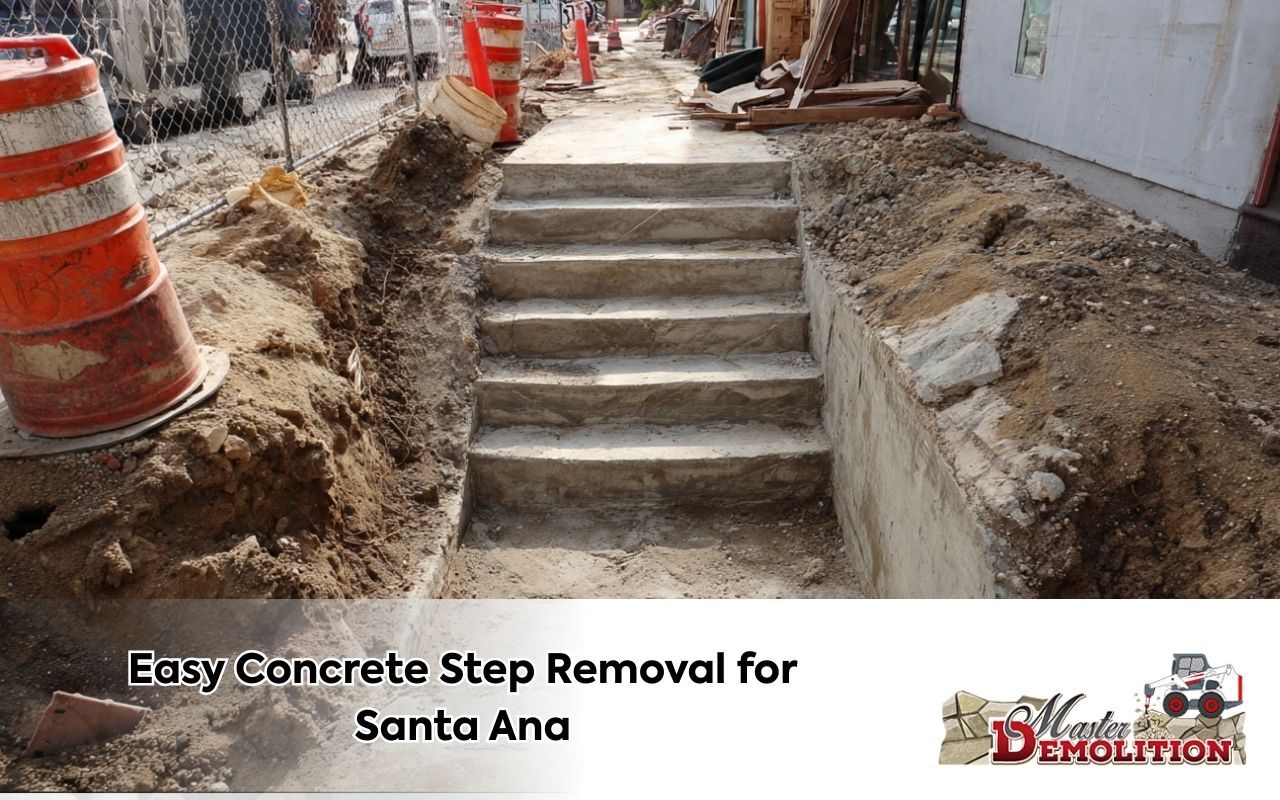
Explore Effective Concrete Steps Removal for Santa Ana. Starting construction work in a busy city like Santa Ana brings unique challenges. Therefore, removing concrete steps needs a clear plan and careful work.
Concrete steps removal for Santa Ana often involves saw cutting and dealing with rebar. In addition, tight access can slow the job. So, this guide shares best practices and greener methods. As a result, you can finish smoothly while keeping recycling in mind.
Plan for Access Limits in Santa Ana Neighborhoods
Concrete steps removal for Santa Ana often starts with access constraints. For example, narrow alleys, tight driveways, and busy sidewalks need a clear work plan. First, measure walkways and note low branches or overhead lines. Then, confirm tools can move in and out without damage.
Also, coordinate with city staff and nearby neighbors. Permits may restrict noise and work hours. Likewise, parking limits may force staging farther away. Therefore, plan deliveries during quieter traffic times and place clear signs. As a result, the crew keeps the job safer and on schedule.
Measure entry points and turning space before tools arrive.
Choose smaller tools when access is limited.
Plan a clear route for debris carry-out and loading.
Work with Care for Cleaner Results
Concrete steps removal for Santa Ana goes faster when the work is precise. First, mark cut lines for each tread and riser. Then, use simple guides like chalk lines, tape measures, and laser levels. This way, you avoid unwanted chips near slabs and walls.
Instead of rushing, take smaller breaks in the concrete. Consequently, you reduce dust and avoid breaking more than planned. In addition, cleaner edges help the next phase, like new steps or fresh landscaping. Overall, careful work saves time and limits rework.
Mark each cut clearly before any tool touches concrete.
Remove sections in small pieces to control cracking.
Protect nearby surfaces with boards and dust control.
Use Saw Cutting to Speed Up Removal
Saw cutting can make the job faster while keeping edges neat. For instance, diamond blades cut dense concrete with fewer surprises. Also, water feeds keep blades cooler, which helps them last longer. As a result, the crew keeps a steady pace with better control.
Before saw cutting begins, confirm blade size and concrete depth. Then, check power or fuel access. While slurry and dust can appear, wet vacuums and water control keep the area cleaner. If you want to see related work, explore the service details on our concrete demolition California page.
Check blade fit and depth before the first pass.
Use water flow to reduce heat and dust.
Clean slurry often to prevent slips and mess.
Handle Rebar the Smart Way
Rebar adds strength, yet it can slow removal. So, locate the steel pattern before deeper cuts. For example, simple metal scanners can help map the bars. Then, plan cuts to reduce trial-and-error work. Consequently, the crew avoids wasted time and extra noise.
Next, cut rebar with metal blades or strong cutters made for steel. For tougher areas, hydraulic rebar tools reduce strain. Afterward, bundle pieces for recycling, since clean metal is easier to process. Also, this step supports a greener job site.
Recycle More and Waste Less
Recycling helps turn broken concrete into useful base material. For example, chunks can go to a crusher and become gravel for paths or pads. As a result, you reduce landfill use and cut hauling needs. In addition, sorting debris on-site keeps loads cleaner.
Moreover, remove wood, plastic, and mixed trash early. Clean concrete and metal often have better reuse options. If you want to see real job clips and site practices, visit our Master Demolition videos page. And if you want help planning a cleaner teardown, use our contact page to discuss your site needs.
Frequently Asked Questions
What makes concrete step removal harder in Santa Ana?
Busy streets and tight access constraints often limit tool choices and staging space. Therefore, planning matters more.
When should I use saw cutting instead of breaking?
Use saw cutting when you need clean edges near walls or slabs. Also, it helps control cracking.
How do crews find rebar before cutting?
Many teams use metal scanners to locate rebar patterns. Then, they plan safer cut paths.
Can removed concrete be reused?
Yes. Recycling can turn old steps into crushed base for driveways or pads. Consequently, waste drops.
How do I keep the site safer during removal?
Use masks, eye protection, and clear work zones. In addition, manage dust with water and vacuums.
Finish a Cleaner, Safer Removal Plan in Santa Ana
Concrete steps removal for Santa Ana works best with careful planning and the right tools. By managing access constraints, using saw cutting, and handling rebar safely, you limit surprises. In addition, recycling supports a more responsible job.
Concrete steps removal for Santa Ana can stay on schedule when you plan routes, control dust, and sort debris early. Therefore, you protect nearby surfaces and reduce waste. With smart steps and safer methods, your project can meet local needs and support a greener build.

Master Demolition offers licensed demolition services with 20+ years of experience. Safe, reliable, and affordable solutions for pools, concrete, interiors, and more.
Contact
114 South Los Timbres Street, Orange CA 92869
We cover a 70-mile radius around Orange CA 92869
Monday to Friday, 7:00 AM – 5:00 PM
Payment Methods: Cash, Check, Credit Cards, Zelle